Sundays with Sam #19: Word is Brand
On brand, demand gen, and why The Book of Elon is not a liberal arts education.

Burn After Reading
The word “brand” begins with fire. The Old English brand meant fire, torch, or a piece of burning wood. Eventually, the word moved from the burning thing itself to the mark that burning left behind.
This is where brand starts: a mark burned into the skin of an animal to identify ownership. Crude, practical, slightly barbaric. This cow belongs to me. These goods came from this maker. This mark tells you where the thing came from and who should be held responsible if it wanders off and knocks down your gate.
At first, the brand identified origin and providence. Origin led to accountability. Accountability created trust. A mark became a promise.
The Speed of Trust
Markets require trust because buyers cannot inspect everything from first principles. Every purchase contains uncertainty. Will this work? Will I get fired? Will my boss think I’m an idiot? A functioning market needs ways to reduce uncertainty without requiring prolonged diligence for every transaction.
Brand solves part of that problem. It compresses memory, reputation, and social proof into a symbol. A name on a product tells the buyer there is a history behind it. A logo says other people have been here before. A phrase, a color, a ritual, a repeated promise: all become shortcuts for belief.
Brand lets trust scale beyond personal relationships. In a village, you know the baker. In a global market, you know the mark.
Ogilvy and the Birth of Modern Brand
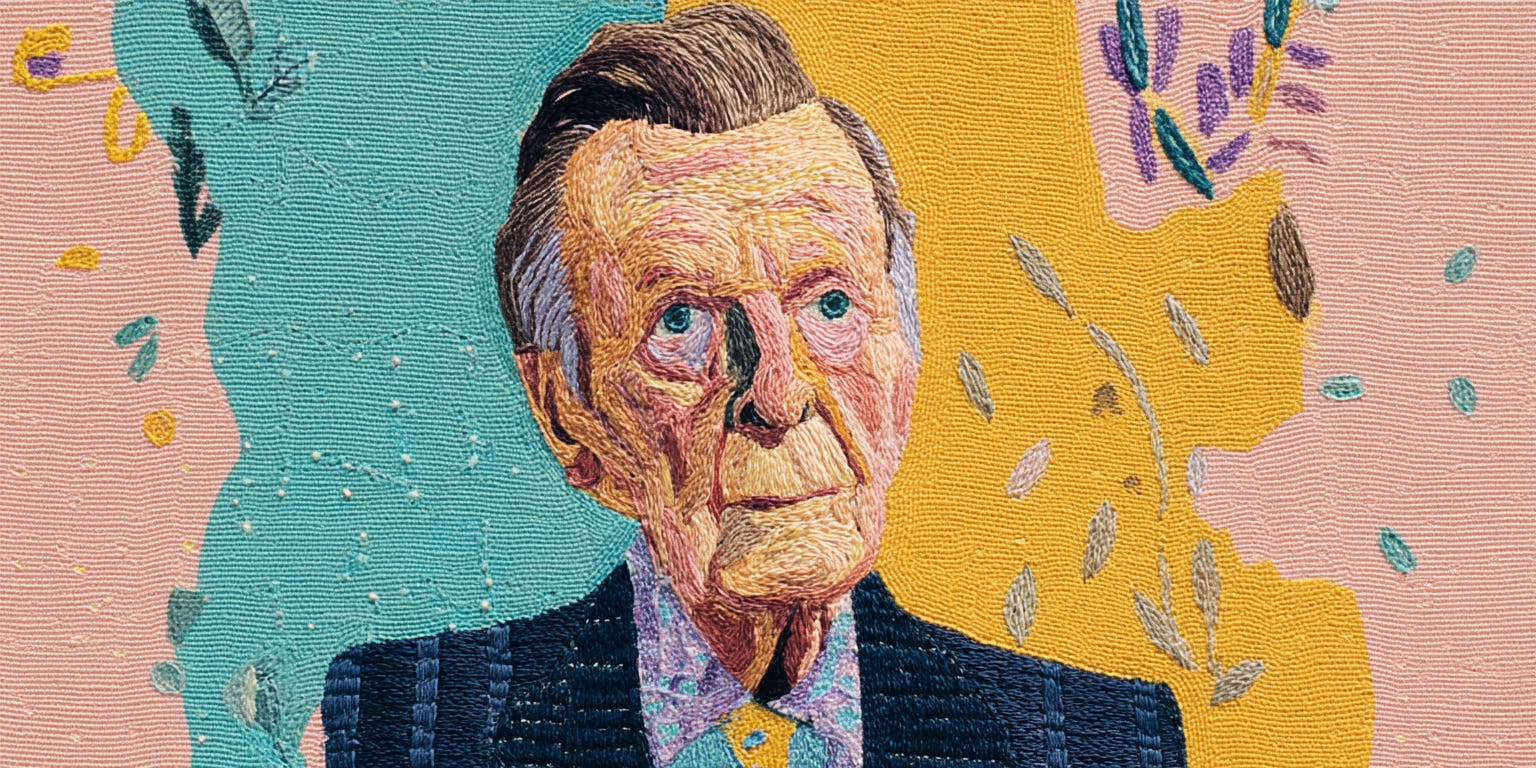
David Ogilvy understood this better than anyone.
Ogilvy is often remembered as the grand old man of advertising: the Rolls-Royce headline, the Hathaway man, the elegant suits. But Ogilvy was deeply commercial. He cared about selling. He believed in facts and research. He brought discipline to advertising.
In 1955, Ogilvy gave a speech called “The Image of the Brand,” whose central idea is still true: every advertisement contributes to the long-term personality of the brand. Every message teaches the market something. A campaign may sell today, but it also deposits evidence into memory. It tells the buyer what kind of company this is, what kind of promise it makes, and whether that promise deserves belief.
Performance marketing asks, “Did this convert?” Brand asks a slower and more consequential question: “What did this teach the market to trust?” The best advertising does both. It captures demand today and makes future demand easier to capture tomorrow.
Brand Becomes a Strategic Asset
Eventually, people tried to formalize the magic.
David Aaker helped popularize the idea of brand equity as an asset to be managed. Kevin Lane Keller defined customer-based brand equity as the differential effect of brand knowledge on consumer response, an academic way of saying that the same product performs differently when attached to a stronger name.
Les Binet and Peter Field clarified the time frame distinction that divided modern marketing. Short-term activation harvests demand. Long-term brand building creates future demand. They created the oft-cited 60/40 heuristic: 60% of marketing investments should flow into long term brand and 40% into short-term demand generation. Growth requires both harvesting and planting. A company that only harvests eventually finds itself driving a combine across an empty field

When Dashboards Killed Marketing
Software companies spent the last 15 years ignoring this.
A recent CMO survey shows budget mix shifting to ~70% short-term demand gen and 30% long-term brand building in 2024, or almost the exact opposite of the optimal mix In software, the practical split feels closer to 80/20. So much of what gets called brand is just demand capture with better lighting: gated reports, webinars, retargeting, SDR-triggered event follow-up. The list goes on.
Most SaaS companies completely misunderstand the fundamental premise. Brand investment is the work of creating trust before intent exists. Demand capture asks, “Who is ready to buy?” Brand asks, “Who will believe us when they are?” That distinction got lost in the dashboard era. The click appeared. The trust did not. So software companies funded the things they could attribute, starved the things that made attribution easier in the first place, and then wondered why everyone sounded the same.
Please Read Fiction
The rise of attribution-obsessed dashboards coincided with a broader cultural decline in the kind of reading that teaches people how stories work. A 2025 University of Florida found daily reading for pleasure fell by more than 40% from 2003 to 2023. Fiction is more than idle leisure. It is ambient training in storytelling. It teaches you how facts become meaning.
Software, meanwhile, became dominated by people trained to think in systems, not stories. Many could explain what the product did but nobody could explain why anyone should care. And they weren’t going to learn when all of their reading came osmotically from David Senra talking about Elon Musk.
Brand tells a story and that story tells you about yourself and the choices you make. Nike does not say “rubber-soled athletic footwear for exercise occasions.” Nike says “Just Do It.” That line embeds both permission and identity. It explains the customer to themselves.
Trillion Dollar Brands
The objection you’ll hear from any tough-sounding CEO: that sounds nice and feels true, but the spreadsheet wants numbers and we’re behind on our forecast. We can talk feelings when we’re 100% to plan. Fair enough. Brand may resist clean attribution, but the value shows up in places executives already care about.
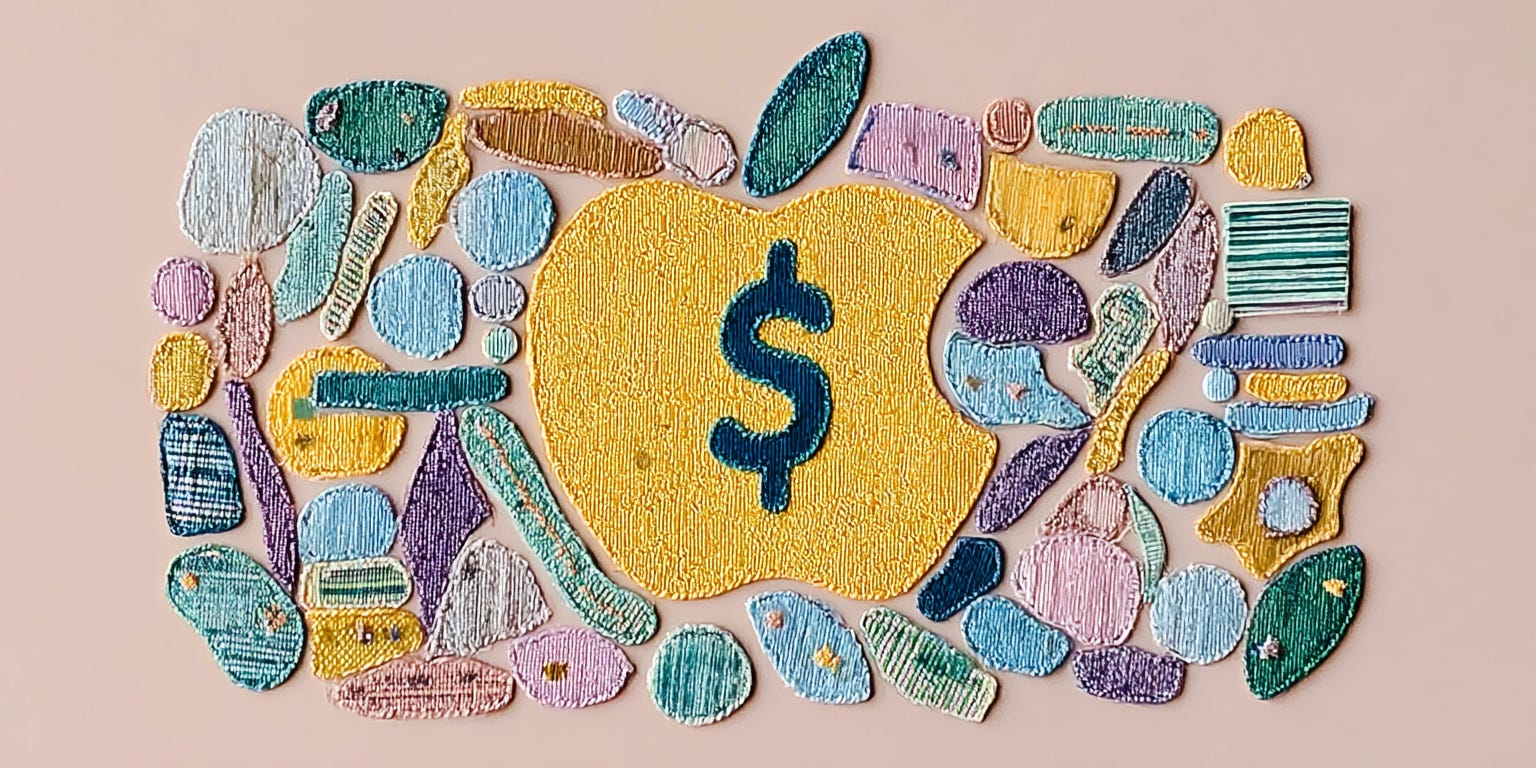
Take pricing power. Google’s marketing effectiveness work shows strong brands can command 2x the pricing power of weaker competitors. Or enterprise value. Across 4.3M consumers and 21,000 brands, Kantar’s BrandZ 2024 ranking named Apple the first trillion-dollar global brand, with Google, Microsoft, and Amazon following closely behind.
For software companies, brand appears as lower friction everywhere: more branded search, more direct traffic, stronger organic inbound, higher referral rates, warmer first calls, shorter sales cycles, less discounting, better renewal conversations, stronger event pull, higher applicant quality, and customers who repeat your language back to you. Brand is measurable. It simply refuses to sit politely in one line item.
Who Can You Trust?
A brand tells the market what can be believed. It reduces uncertainty. It says: this company knows who it is, this product will do what it promises, these people will still be here tomorrow, and the experience will match the story. Trust turns recognition into preference. And preference into pricing power.
That is why the most valuable brands feel steady. They may evolve, but they do not panic. They have a point of view about the world and they communicate it to you in a way that feels real.
The Cost of Slop
AI is the antithesis of trust.
AI is average language, tokenized and predicted at scale. Trained on the residue of everything everyone has already said, then arranged into something plausible. But plausibility is not trust. A sentence can sound right and still come from nowhere.
This is our modern world. Infinite copy. Infinite content. Infinite thought leadership from people who have not thought deeply about anything.
Competence without conviction. Smoothness without soul. Words without a witness.
The question is no longer, “Can I find an answer?” But, “Can I believe this answer?” Not, “Can this company explain what it does?” But, “Can I trust the people behind the explanation?”
And more importantly: “Are there people back there at all? Did a human have anything to do with the message I’m receiving?”
"Is anyone out there?”
Trust requires memory. And behavior. It requires a company to make a promise, keep it, and keep keeping it.

Word is Brand
This is the real test of a brand: how much does it give compared to how much it takes?
Weak brands take constantly.
They ask for attention.
Email addresses.
And meetings, belief, patience, and forgiveness.
Gated reports.
They send the sequence.
Every interaction a conversion path.
You are not a customer. You are prey.
Strong brands give first.
Clarity.
A point of view.
Research and data and market information.
Useful ideas.
Status.
And yes belonging.
They give a buyer a better way to understand themselves.
Nike gave motivation before it sold shoes.
HubSpot gave the market the science of inbound before it sold software.
The best brands reward attention before they ask for action.
A brand is not built by saying, “Trust us.”
Every company says that.
A brand is built when the market experiences you as a net giver for long enough that trust becomes the default.
Community. Brand. Authenticity.
In the age of AI, the only moat is a human being doing what they say they are going to do, in real human words, for a very long time.
So we can trust them.
Next Week
The Access Economy. The number of U.S. public companies has fallen by roughly half since its late-1990s peak, even as the most important companies in the economy keep getting larger, richer, and more consequential. What’s left are private companies, private rounds, steep hard-to-explain fees and a growing list of “insiders” with access before everyone else.
Also On My Mind
A few other things on my mind. Let me know what else you might like me to write about.
A growing number of operators now work for PE-backed businesses that are stuck in valuation traps. You’ll hear the word EBITDA more frequently than ever but nobody understands we need more than EBITDA - we need an asset that retains value. That’s what people want to buy.
Thanks for reading.
Sam
PS “Sundays with Sam” comes out every Sunday. If you liked this, feel free to share it with a friend or send it to your CEO with an ambiguous emoji. If you like the pictures, use Midjourney reference code --sref 3173464714 to make your own. Unsubscribe freely for any or no reason.
The theory of building a brand is easy. The practice a whole lot more complicated
To your point, there are many proxies to measuring brand, but many are waiting to see it as UTM parameter against a specific campaign budget.
Measurement and attribution are still the largest issues in justifying and gaining support for investing in activities that may not lead to a direct response.
And most importantly, you have no business investing in brand or anything that isn’t a direct response if the compensation and measurement model isn’t aligned first.