The Operator's Toolkit
Why the most powerful AI tools will never become companies


Wild-Eyed Builders
Last week I was on the phone with a Pavilion member, a RevOps specialist who spends his days designing systems inside companies. Like many conversations I’ve had recently, there was a certain giddiness to the call. He had been in what he described as his “lab,” building things using Claude, Lovable, and Replit. Over the course of a few days he had assembled several small applications and was eager to show them to someone who might appreciate the chaos.
He began clicking through them almost frantically. One application translated project management tasks from Asana directly into a CRM. Another automated part of a workflow inside the auto industry. A third stitched together a set of internal tools that previously required hours of manual work. Each solved a real problem. Each had taken surprisingly little time to build.
At one point he stopped and looked at me with a strange mix of excitement and unease. “What should I do with all of this?” he asked. “Any of these could be businesses. How can I turn these things into companies?”
The funny thing about that moment: it wasn’t unusual.
Over the past few weeks, nearly every entrepreneur or operator I’ve spoken with has started the same way: by sharing their screen and showing me something they’ve built.
A Carpenter’s Tools
For most of the last twenty years we have been trained to think about software through a very specific lens. The logic of the SaaS era was simple: build a product, charge for it, scale it. If you could encode a workflow into software and distribute it broadly, you could build a company. Salesforce. HubSpot. Gainsight. Outreach, Salesloft. Figma. Entire industries emerged around selling the digital infrastructure organizations use to run their operations.
But something about the moment we are in feels different. If a skilled operator can build a new workflow application in thirty minutes, so can anyone else. In that light, it’s hard to believe any of these products should be companies.
Maybe they’re just tools.
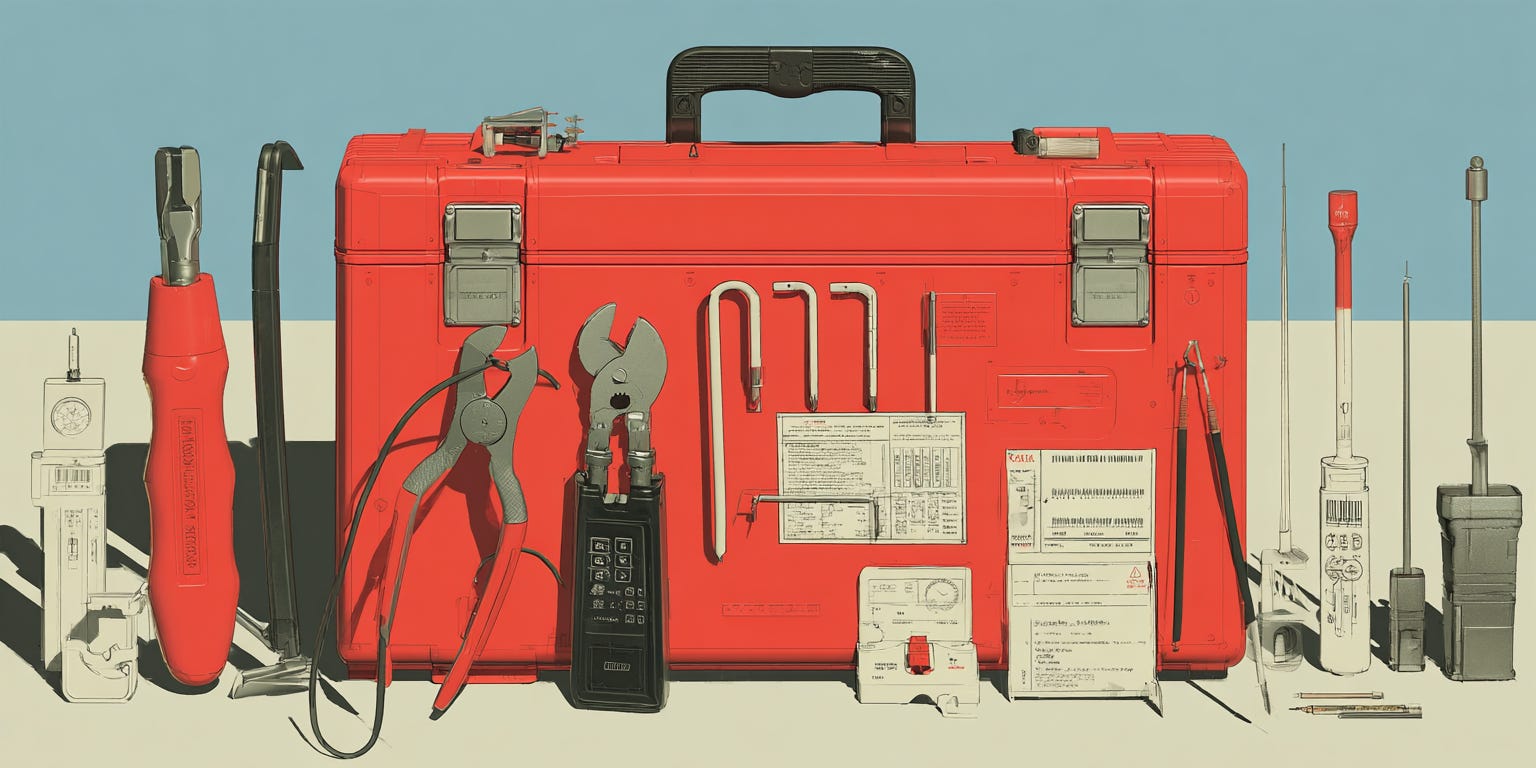
Consider carpentry. A master furniture maker does not arrive at a job empty handed and ask what tools the workshop has available. They bring their own chisels, planes, measuring instruments, and specialized saws. Over time they accumulate custom jigs designed for very specific tasks. Those tools are not products meant for sale. They are extensions of the craft. They allow the carpenter to work faster, more precisely, and more creatively.
Something similar is emerging in knowledge work. Operators are increasingly building their own AI workflows, automation scripts, small internal applications, and research pipelines. Not products. Toolkits.

What is Productivity?
Once you start thinking about work this way, the conversation shifts. The question stops being “what product should I build?” and becomes something deeper: what does it actually mean to be productive?
Most people think productivity simply means working faster. That intuition isn’t wrong, but economists define the concept more precisely.
Productivity refers to the relationship between output and inputs, often measured as output per worker or output per hour worked. When productivity increases, the same number of people can produce more value.
There’s a deeper insight, however. In a landmark 1957 paper, Robert Solow showed that most economic growth cannot be explained simply by adding more labor or capital. Instead it comes from improvements in technology, knowledge, and organization - what economists call total factor productivity. In Solow’s model, once you account for more workers and more machines, a surprisingly large portion of economic growth remains unexplained. That unexplained portion reflects better ways of combining those resources.
In other words, productivity often comes less from the individual parts and more from how the parts are arranged.
History is full of examples of this dynamic. When electricity first appeared in factories, manufacturers simply replaced steam engines with electric motors while keeping the same production layouts. Productivity barely changed. It took decades before managers realized that electric motors allowed machines to be distributed throughout the factory floor rather than connected to a single central drive shaft. Once factories reorganized around this new architecture, productivity surged.
The transformation did not come from electricity alone. It came from redesigning the system around what electricity made possible.
Three Mechanisms of Productivity
When economists look at how productivity actually increases, they tend to see three recurring mechanisms.
The first is automation, where machines perform tasks previously carried out by humans. The mechanization of agriculture is the classic example. In 1900 roughly forty percent of the American workforce worked in farming. Today the number is closer to two percent. Machines replaced enormous amounts of manual labor while dramatically increasing output.
The second mechanism is augmentation, where technology increases the output of individual workers. Power tools allow carpenters to produce furniture faster and more precisely. Spreadsheets allow analysts to process information that once required entire departments. In these cases the worker remains central, but the tools amplify their capability.
The third and often most important mechanism is reorganization. Economists studying what they call general purpose technologies - technologies that reshape many industries simultaneously - have repeatedly observed that productivity gains often appear only after work itself is reorganized. In a widely cited paper, Timothy Bresnahan and Manuel Trajtenberg describe how technologies like electricity and computing generate growth only after complementary innovations reshape how work is structured.
If AI is a similar general-purpose technology, the largest productivity gains may come not from the tools themselves but from how people reorganize work around them.

Death of the Intermediary
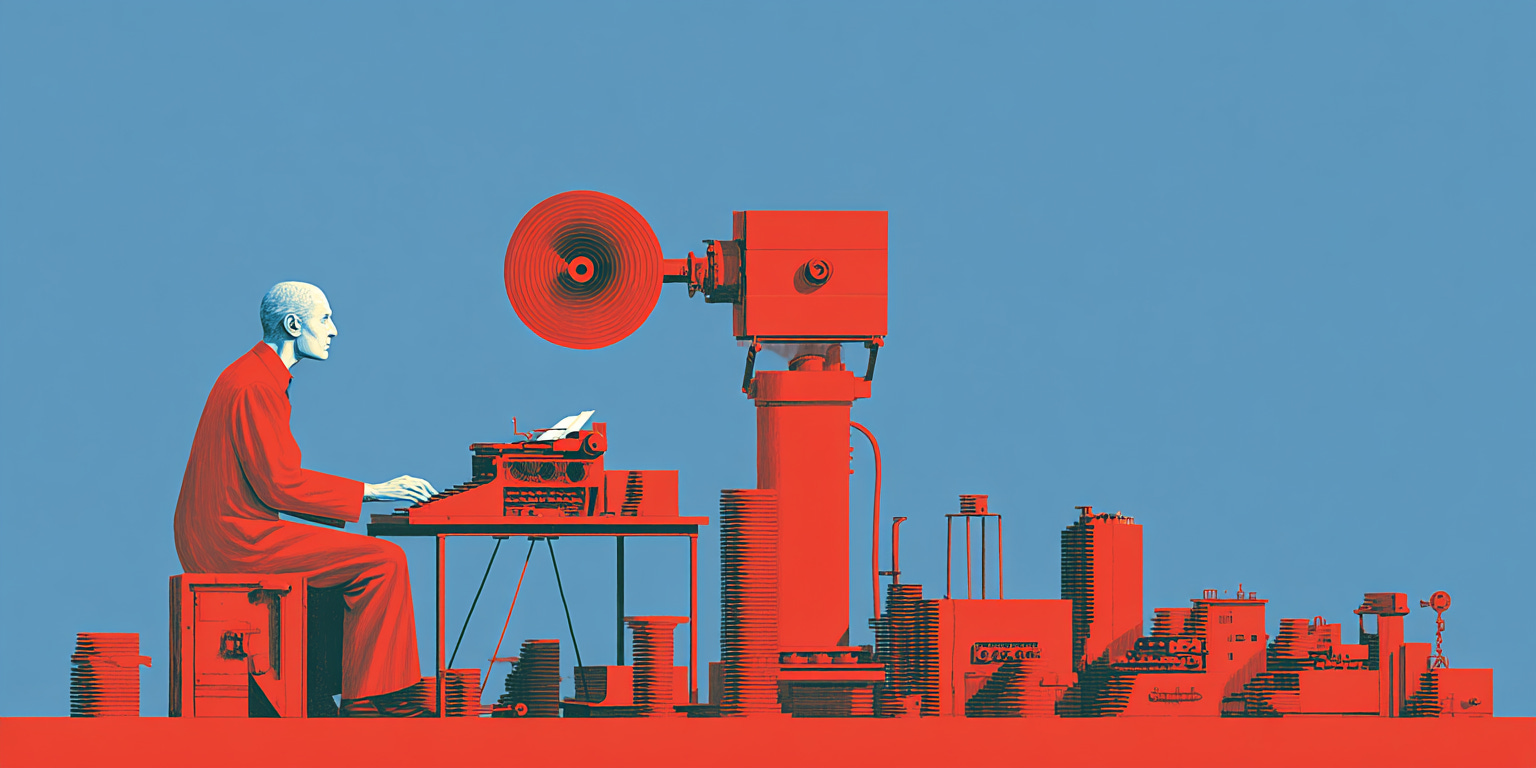
For most of the software era, technology functioned primarily as an intermediary. A SaaS product sits between the user and the database. Its job is to capture information, structure it, and display it back in ways that help you manage a workflow.
Salesforce organizes deals. Eloqua organizes marketing activity. Carta organizes cap tables.
But the software itself does not solve the problem. It helps you manage the process of solving the problem. It’s worse than that in fact. What the software actually does is force you to work in a way that’s convenient for the software, regardless of how you want to solve the problem. In our old world, entering information into Salesforce was work.
What AI begins to change is the role of the intermediary. Instead of simply organizing workflows, the technology participates directly in producing the outcome.
Julien Bek from Sequoia recently captured this shift in an essay titled Services: The New Software. His argument is that the next generation of successful companies may not sell software tools at all. Instead they will sell the work itself: not accounting software but closed books, not customer support software but resolved customer support tickets. In his framing, we are moving from copilots that assist professionals to autopilots that complete the job.
But beneath this shift lies something even more interesting.
Systems and Workshops
If technology increasingly delivers outcomes rather than simply organizing workflows, the center of gravity begins to change.
During the SaaS era, productivity lived primarily inside teams. Building and operating complex systems required coordination between engineers, analysts, operators, and managers working together.
But when tools become dramatically easier to assemble and deploy, more of that capability collapses into the hands of individuals.
The RevOps specialist I spoke with was not building companies. He was building pieces of infrastructure that amplified his ability to solve problems inside systems he already understood. Each tool was small. Each addressed a narrow challenge. But together they formed something much more powerful.
A workshop.
An individual’s workshop.
Empowered Operators
Earlier this year I wrote about what I called the AI-Empowered Sales Superhuman. My premise was simple: the most effective sellers will operate with dramatically more leverage than their peers.
AI allows top performers to research accounts faster, synthesize information more quickly, automate administrative work, and personalize communication at scale. When the overhead surrounding the job collapses, the best operators spend more time doing the thing that actually matters: engaging customers and solving problems.
The result is not incremental improvement. The gap between top performers and everyone else widens.
Something similar is happening across knowledge work more broadly. When operators assemble powerful toolkits, productivity concentrates in the individuals who understand how to wield them.
The Operator’s Toolkit
Which brings us back to the original question.
When someone builds a small AI tool and asks whether it should become a business, the answer may often be no.
It might simply belong in their toolkit.
If software becomes ubiquitous and inexpensive to produce, the competitive advantage shifts away from the existence of software itself. Instead it moves to the people who know how to combine tools with judgment and context to solve real problems.
The best carpenters were never defined solely by the tools they owned. They were defined by how they used them.
The same is true of knowledge workers.
The defining shift of the AI era is the rise of a new kind of worker: an operator whose productivity comes from skill, experience, and a set of personalized tools. Digital tools they’ve built, customized, and carry with them for every job.
And whose workshop increasingly fits inside a laptop.
Now let’s do a screen share so you can show me what you’ve built.
Also On My Mind
A few other things on my mind. Let me know what you’d like me to write about
I’m generally skeptical of people that say “AI will never replace humans in [x] activity.” So where do we hide out to preserve our value?
The most active conversation about AI’s impact on Go To Market right now is inside Pavilion. We’re also launching a new AI Buddy program (build AI with someone else for accountability and faster learning), a new pulse survey, and of course our AI in GTM School launching soon. If you’re interested in knowing what’s going on as it happens, take a look here.
Has anyone else stared at their P&L recently and looked at all the SaaS subscriptions and thought about just cancelling everything? Do we really need project management tools in the new age? Can’t we build that with Lovable in 30 seconds? Isn’t that what CoWork is?
Thanks for reading.
Sam
PS If you liked this, feel free to share it with a friend, post it online, reply to this email and say hi. This newsletter comes out every Sunday. If you didn’t like it, unsubscribe freely. No hard feelings.
PS If you want more [checks notes] content, feel free to listen to us on Topline or join our Slack community where we talk about a lot of this stuff.