

The $1M CRO (Today’s Anomaly, Tomorrow’s Standard)
Last week, I was on the phone with a friend of mine who is a CRO. He’s a specific kind of CRO.
He runs revenue at a $50M company that’s growing roughly 25% this year. But he also carries a $5M personal quota, a number he regularly hits and exceeds.
He’s currently negotiating his compensation, and the framework he’s using is simple: he’s doing the job of a CRO, managing a reasonably sized team. And he’s also doing the job of a high-performing enterprise account executive.
Not only is he willing to sign up for that number, he likes the work. He enjoys leading. He enjoys closing. And he’s built the infrastructure and support around himself to do both. He’s leveraging the right tools, he’s disciplined and responsive, and he is capable of handling multi-threaded multi-stakeholder conversations with some of the best companies in the world.
He’s asking for a $1M compensation package.
The math works. A CRO of a $50M business should probably make around $6-700K with a $300K-$350K base. A strong enterprise AE closing $3–5M should make another $300–500K. If my friend hits the number, he’s giving ownership a very good deal.
They may not see it that way. But that is the reality.
The Coming Concentration of Productivity
The point I’m making isn’t that my friend is an anomaly.
Today, he is. Tomorrow, I don’t think he will be.
We’re entering an era where productivity, and therefore wealth, concentrates more aggressively at the top. If you didn’t like wealth inequality before, you’re going to have a very hard time with the future. Because, AI is about to dramatically increase the inequality between top performers and everyone else, on a scale none of us have ever seen before.
Research consistently shows that people who effectively partner with AI are roughly twice as likely to exceed performance targets, while top AI-enabled teams show 30–40% productivity advantages over traditional teams (Gartner Sales Research; MIT / HBS studies on AI-skill complementarity).
This is why the job market can feel both great and terrible at the same time. Just like the future, opportunity is already here, it’s just unevenly distributed.

The AI-Empowered Revenue Operator
My friend Asad Zaman wrote about this dynamic recently in Topline: how the market can be “hot and cold” at the same time.
The answer, of course, is AI. But not in the way most people talk about it.
We spend a lot of time discussing the raw materials AI needs: data, compute, energy. What we underweight is the most important variable: the human using it.
Evidence from Meta shows that AI increased productivity for its average engineers by about 30%, but for its best engineers by closer to 80% (Meta Q4 Earnings Call, 2025).
The gap in revenue generation is about to become even more stark.
Two recent examples in our world are Matt Braley at EliseAI and Kyle Norton at Owner.com. Both are CROs overseeing teams that are producing levels of output that would have sounded implausible a few years ago. They didn’t necessarily replace people with AI. But they did build an intentional AI-first revenue strategy and paired strong judgment with better leverage.
Asad himself is another example. He runs STA, an executive search firm that’s well into eight figures of revenue. Despite that scale, he personally takes most calls and drives the majority of the firm’s bookings. STA covers a couple trillion dollars of AUM (Asad’s stat because they work with all the best investment managers in the world) and he takes every single intro call with folks from places like Insight, General Atlantic, a16z, and more. This simply wasn’t possible before AI-enabled workflows. In today’s world that kind of productivity is only part of what Asad does, in addition to hosting a podcast and closely following the markets.
Why Sales Feels the Shift First
This isn’t unique to sales.
I was on a run this morning with Vincent Jong through the hills of Barcelona, talking about the collapse of traditional functional boundaries. Historically, to build software you needed a big pod that might include a product manager, a designer, an engineer, and even a UX researcher or designer. Today, every one of those stakeholders is questioning the necessity of the other members of the pod. It’s not that product management or UX won’t exist.
It’s that AI is collapsing multiple roles into a single operating surface.
Sales feels this shift earlier because it sits at the intersection of judgment, prioritization, communication, and execution.
And because the baseline was so inefficient.
The 25% Problem (and Why It’s About to Disappear)
Historically, sellers spend only ~28% of their time actively selling if selling means talking to customers, understanding problems, and mapping a current state to a future one (Salesforce, State of Sales).
That’s shockingly low.
What AI does - in practice, not theory - is compress the overhead around selling. In early enterprise deployments, sales teams are reporting 30–60% reductions in administrative work, reclaiming meaningful time each week without extending working hours (Bain & Company; Salesforce Research).
Best-in-class organizations are already targeting 40–50% customer-facing time as a near-term goal.
That shift alone creates step-function gains in productivity.

The New New World of Revenue Generation
I’ve walked through this math in keynotes before. If top performers have even modestly higher win rates and deal sizes, reallocating high-quality leads toward them creates outsized returns. In my typical examples, we’d typically see a meaningful boos in per rep productivity (as high as 6.5x) through more effective lead routing i.e. giving the best leads to the best sellers.
That math has always been true.
What hasn’t been true is the number of high-quality conversations a single rep could reasonably handle.
If you’re manually updating CRM, prepping for calls, writing follow-ups, you’re probably capped at three meaningful external calls a day. Maybe 15 a week.
In an AI-enabled world where calls are transcribed, CRM updates happen automatically, context is surfaced in real time, and follow-ups are drafted intelligently, that constraint loosens dramatically.
With tools like Attention and Fluint, reps no longer write follow-ups from scratch. One click sends a thoughtful email that captures the business case, ties directly to strategic pain, and reflects what actually happened in the conversation.
It becomes entirely reasonable to imagine top performers having five or six high-quality conversations a day, without sacrificing presence or quality.
The Coins of the Realm
In this new world, anything “dumb” - data entry, repetitive follow-up, call prep - will be and is being taken over by AI.
The most valuable skill in sales is obviously not data entry. It never was.
What becomes scarce and therefore more valuable is the ability to have an interesting conversation, to listen deeply, to manage complexity, and to tell compelling stories grounded in real understanding.
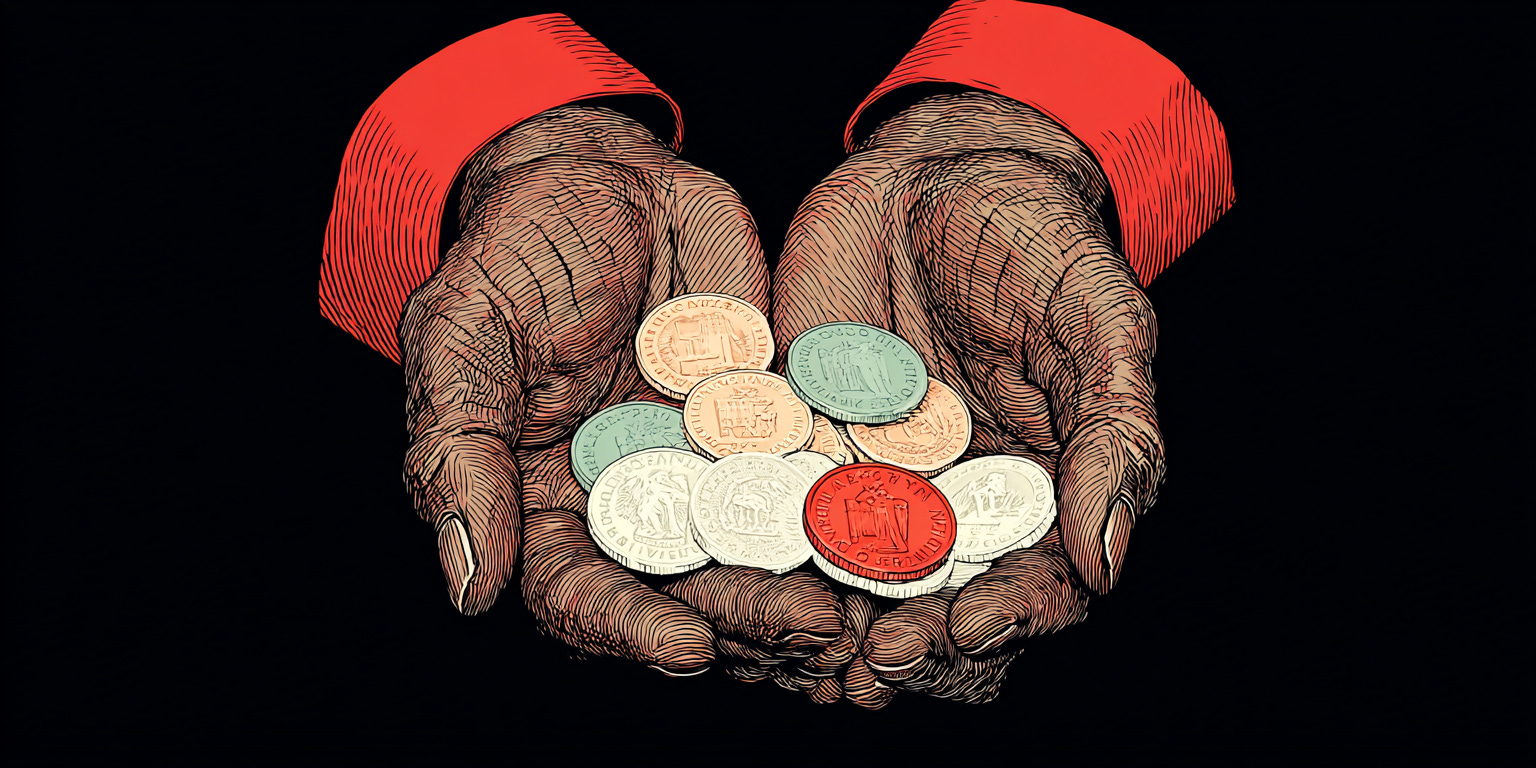
Storytelling. Judgement. Taste. Style. These are the coins of the realm.
Research shows that productivity gains from AI are non-linear: strong judgment paired with AI produces outsized returns, while weak judgment paired with AI accelerates mistakes (MIT / Stanford / NBER Working Paper: Generative AI at Work).
Yes, AI will improve the productivity of your average rep. But it will transform the productivity of your best rep. And the economics of your business will be forced to follow suit.
The Uncomfortable Conclusion for Revenue Leaders
This leads to a set of uncomfortable questions.
If an average mid-market rep produces $700K in ARR, why shouldn’t a top performer produce $1M or more? If enterprise reps can handle more throughput with better tooling, why shouldn’t quotas rise 25–30%?
At the same time, growth has become materially more expensive. Sales and Marketing spend per dollar of new ARR has increased significantly since 2021, while overall growth efficiency has declined by roughly 50% across many SaaS cohorts (Pavilion / Ebsta GTM Benchmark Report; BenchSight).
That means every misallocated lead costs more than it used to.
The cost of “fairness by territory” has never been higher and rises every time demand is routed to someone with a lower win rate, longer cycle, or weaker leverage.
As I mention above, when I did the math a few years ago, I calculated that every single time you send a warm lead to someone average you could be sacrificing 6.5x in per rep productivity. In 2026, that number will likely grow to 10x.
You will simply not have the time to inordinately focus on “fairness” as the determinant of who gets what. You’ll need a training period where everyone gets equal access to similar quality leads. Followed by a ruthless re-sorting where the best reps instantly get promoted to the Premier League.
I don’t have a great answer for what happens to everyone else.
This is a harder market.
But it’s also a better one: for disciplined, high-judgment operators who know how to use leverage well.
It’s more than a better one. This market is the single biggest wealth creation opportunity for top performers I’ve seen in my entire career.
Welcome to the world of the new AI-empowered sales superhuman.
Buckle up.
Also On My Mind
A few other things on my mind. Let me know what you’d like me to write about
On the market crash: maybe you can really can vibe code a CRM?
Business lessons from American Wars: Fortune favors the bold, they’re just as scared of us, and why Grant won the war but Lincoln chose Grant in the first place
Some reflections on a new year without alcohol
What’s the future moat: distribution? brand? IRL? It’s definitely not product velocity.
Thanks for reading.
Sam
PS If you liked this, feel free to share it with a friend, post it online, or think kindly of me during a quiet walk in the woods (weather permitting). This newsletter comes out every Sunday. If you didn’t like it (or find me irritating) unsubscribe freely. No hard feelings.
We are witnessing the modern renaissance for operators. Wit, intuition, and ambition will separate the initial runners from the pack, and the next group will form from these learnings. Unlock your potential and pivot into the adventure - trust yourself.
"Storytelling. Judgement. Taste. Style."
That's the whole thesis. AI handles the rest.
The reps who get this early are building a moat that's going to be very hard to close. It's exactly what I write about in my newsletter. The tools are table stakes now. The person behind them is the differentiator. :)