Sundays with Sam #25: The Everything Company
Why intelligence becomes infrastructure, but focus remains strategy


Vertical Integration
Last week on Topline, the gang had an interesting debate with Gaurav Agarwal, the COO of ClickUp. He’d just spent an hour describing how his company is rebuilding itself around AI. They are replacing workflows with agents, encouraging top performers to automate entire functions, and reorganizing around a future where humans supervise systems rather than execute repetitive work. Toward the end of the conversation, Asad posed a now commonplace question: if the foundation models continue improving at this pace, do we even need application software anymore? Perhaps Anthropic, OpenAI, or Google simply become the application.
Every few weeks, one of the foundation labs is releasing a new feature seemingly intended to replace entire categories. Bookkeeping. Legal work. Design. The argument: If one model can write software, answer customer support tickets, summarize meetings, negotiate contracts, generate marketing campaigns, and reason across every domain of human knowledge, why wouldn’t that model eventually own every category of enterprise software?
In an age of abundance, perhaps the history comparative advantage is out the window. Perhaps. But the closest metaphor for artificial intelligence is electricity.
And if AI is electricity, we arrive at an obvious question:
Do you really want ConEdison to make your dishwasher?
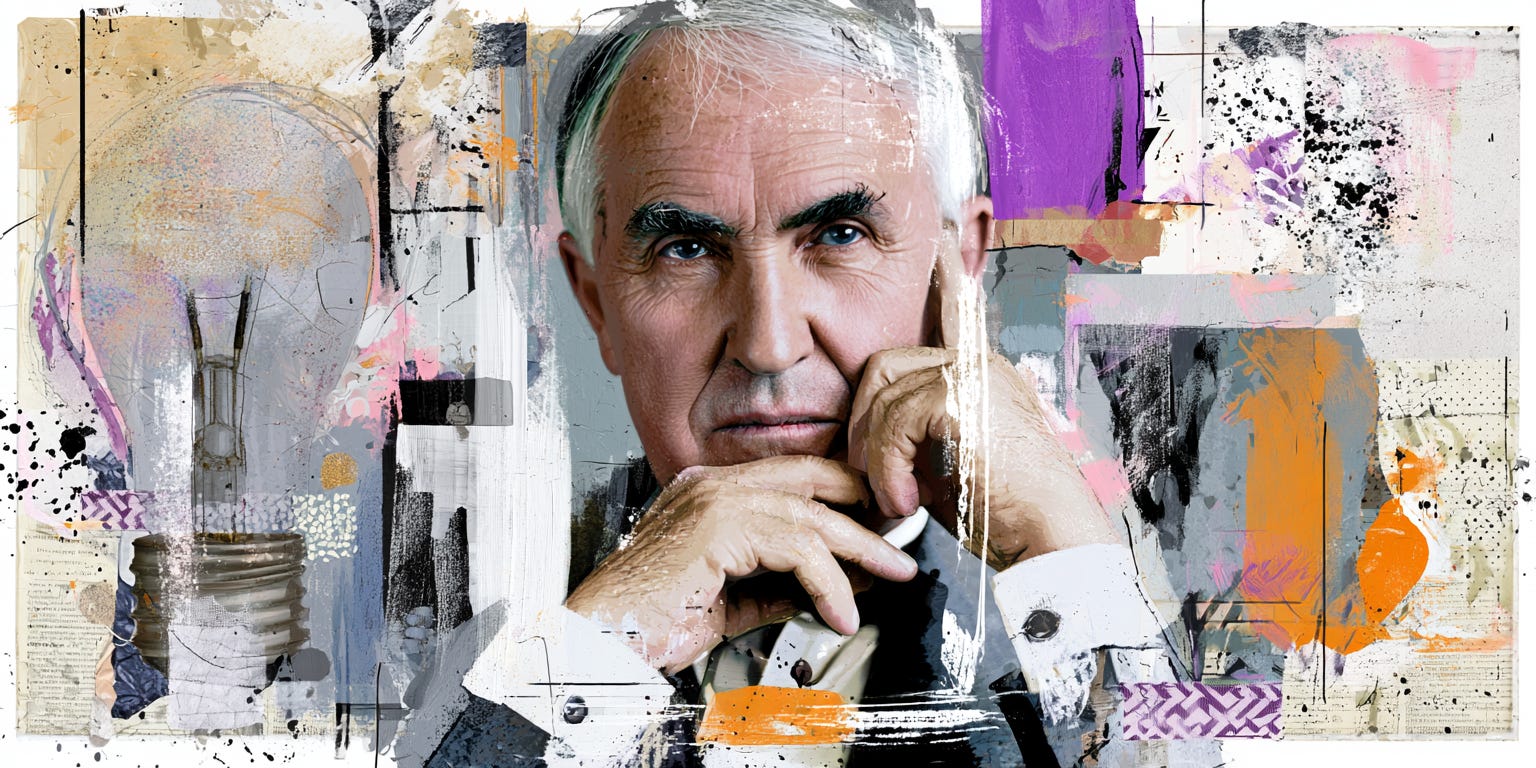
Edison Didn’t Build a Light Bulb
Thomas Edison invented the lightbulb among over 1,000 other patents he amassed during his lifetime. But the true genius of Edison wasn’t simply his dogged determination but his fundamental understanding that systems are necessary to produce outcomes.
Without electricity, electric light was no more than a laboratory curiosity. So rather than inventing a product, he built an entire system. His companies manufactured every conceivable piece of the machinery necessary to deliver incandescence to the public. The Pearl Street Station that opened in lower Manhattan in 1882 was a flagship example. Not simply a power plant, it became the center of an integrated electrical ecosystem designed to deliver electric light as a complete commercial service.
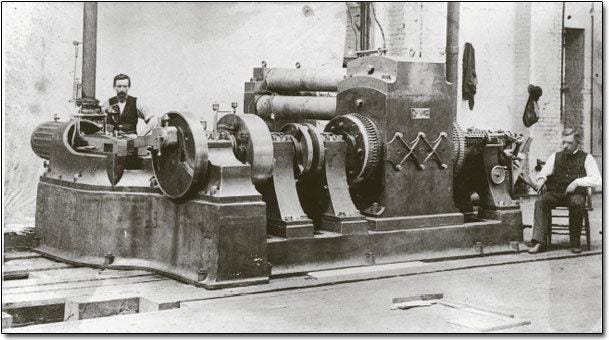
Here we have one of the earliest and most successful examples of vertical integration. Edison understood that controlling every layer of the electrical system created a dramatically better customer experience. The generator, the wiring, the meter and the bulb were designed to work together because they came from the same vision.
Yet there is something equally important about what Edison chose not to build. He never insisted his companies manufacture every appliance electricity would eventually power.
Once homes had electricity, entrepreneurs built refrigerators. Radios. Washing machines. Hair dryvers. And a million other new gadgets the world could not have conceived of 50 years earlier. Electricity became infrastructure, and that infrastructure unleashed an explosion of specialization.
Conglomerate Discounting
American business eventually forgot the distinction that Edison understood. Vertical integration slowly evolved into something very different far less valuable: conglomeration.
The logic seemed irresistible. If controlling every stage of one business created value, surely owning many businesses would create even more. During the 1960s and 1970s, companies like ITT, Gulf + Western and Litton Industries assembled sprawling collections of unrelated businesses. Hotels sat beside insurance companies. Movie studios beside defense contractors. The prevailing belief was that exceptional managers could allocate capital better than public markets themselves.
The promised synergies rarely appeared. Capital allocation became increasingly difficult. Management attention fragmented across businesses with completely different customers, competitors and economics. Complexity accumulated faster than competitive advantage. By the 1980s and 1990s, many of the most celebrated conglomerates spent decades dismantling themselves, spinning off divisions and returning to their core businesses.
Finance eventually gave this phenomenon a name: the conglomerate discount. Investors repeatedly valued diversified corporations at less than the combined value of their individual businesses. Berger and Ofek demonstrated the combined value of disparate assets tends to be 15% below where each asset would trade independently.
It turns out public shareholders don’t need corporations to diversify for them. They can buy an index fund. They can own ten different companies. What they cannot easily buy is a management team singularly obsessed with solving one difficult problem. Activist investors built entire careers around this insight, arguing that value was created not by acquiring more businesses but by selling them.

Rhyming History
Every technological revolution convinces itself that the old rules no longer apply. Railroads were going to own commerce. IBM would own computing. Google would own the internet. Anthropic will eventually own every application built on top of it.
History suggests the exact opposite.
Foundational technologies amplify specialization. They never erase it. Electricity created appliance manufacturers. The internet created new forms of retail. Cloud infrastructure produced thousands of SaaS businesses. Every time a foundational capability becomes abundant, entrepreneurs stop competing over access to the capability and begin competing over how that capability is applied to solve specific human problems.
AI is following the same path. Intelligence is the new infrastructure. The frontier models will continue improving, costs will continue falling, and reasoning will become ubiquitous. But that does not mean the owners of intelligence become the owners of every workflow. It simply changes where comparative advantage lives.
The scarce resource becomes the ability to package intelligence into products that fit into the way human beings actually work. Abundance has never eliminated differentiation. It has always moved differentiation one layer higher.
Lost in the Supermarket
The fundamental constraints underpinning all of this are the limits of human cognition itself.
Our brains thrive in heuristics. Cognitive psychologists have long understood that people rely on mental shortcuts to navigate an impossibly complicated world. We don’t evaluate every company from first principles every time we encounter it. We build simplified associations that reduce cognitive load. In that sense, brands are cognitive compression algorithms. Rolex means status. Volvo means safety. Stripe means payments. Those associations become durable precisely because they are narrow.
Today’s technologists underestimate this organic definition of product because they fail to incorporate these limits of human capability. Claude and ChatGPT are the most impressive technologies I have ever used. They are also, if we’re being honest, surprisingly immature products. Every few weeks another capability appears. But venture out into the world and ask a normie what these things are supposed to actually do and you get a lot of blank stares. The left rail of every foundation model interface is a clutter of distraction and diffusion.
“We’ll just dump all the shit we’ve been building here on the left. You figure out what we mean. We have no idea.”
Apple built one of the most valuable companies in history by pursuing exactly the opposite philosophy. Steve Jobs obsessed over removing buttons, reducing clicks and hiding complexity. Engineering creates capability. Product design makes capability disappear. Those are different disciplines, requiring different instincts, different organizations and different incentives.
The next generation of enormous AI companies will emerge here: separating intelligence from application. Companies like ClickUp, Dust and others are implicitly making this bet already. They assume the models will continue changing, improving and commoditizing. Their advantage comes from owning the workflow, the user experience and the trust of the customer rather than the intelligence itself. That feels remarkably consistent with every technological revolution that came before it. Infrastructure companies become extraordinarily valuable. Application companies become indispensable.

Hello Focus, My Old Friend
None of this is an argument against expansion.
Apple makes phones, watches, computers, tablets, and a ton of other stuff. NVIDIA designs chips, networking equipment, and increasingly entire AI infrastructure stacks. Rippling is an EOR, a payroll system, an HRIS, and every other piece of software you might need to run a company.
These are not narrow companies. But they are coherent companies. And that distinction matters.
Thomas Edison never believed in building a single product. He believed in building a complete electrical system. Every business he created reinforced the same underlying mission: electrification. Each additional component made the entire system more valuable because every piece strengthened every other piece.
The winners of the next phase of the AI era will be the companies that expand around a connected system with a clear organizing principle. Intelligence naturally belongs beside workflow. Workflow naturally belongs beside collaboration. Collaboration naturally belongs beside communication. Those products reinforce one another because they solve different parts of the same customer problem. Building legal software because you happen to own a large language model is something entirely different. It is incoherent.
Every new product should make the existing products stronger. Every expansion should deepen the company’s identity rather than dilute it. Customers should immediately understand why the business entered the new market because the expansion feels inevitable rather than opportunistic.
Focus is not one product. Focus is a coherent system.

The Everything Company
Anthropic and OpenAI will remain two of the most important companies in the history of technology.
They are foundational infrastructure for the next phase of human evolution.
But that doesn’t mean they should own every application. Great companies will be built that compete with one of the throwaway dots on the left side of your AI menu.
Thomas Edison understood that building the electrical grid was a different business from building the appliances that consumed electricity.
Public markets eventually concluded that focused companies create more value than sprawling conglomerates.
And consumers have consistently rewarded businesses that become synonymous with solving one important problem rather than dozens of unrelated ones.
Technology changes.
Human cognition does not.
As long as human beings remain the buyers, users and decision-makers, focus will remain one of the most durable competitive advantages in business.
Which brings me back to my original question.
No.
I don’t want Con Edison making my dishwasher.
Announcements & Noteworthy Happenings
Most GTM operators fail because they can’t connect the language of finance to the activities of business. We run (and I personally teach) CRO School and P&L Fluency at Pavilion for precisely that same reason. The next semester of CRO School starts in two weeks featuring live lectures and mentoring from me, Kiva Kolstein (President of Alphasense), Rick Smolen (CRO of ShipHero), and many more. Join us.
We’re launching small mastermind groups we call Small Councils as part of a new super-secret membership tier. 8-10 non-competitive in-seat operators at the same stage of growth, led by an incredible moderator, meeting 1-2x per month to from the critical personal board of advisors you’ll need to navigate the new world. Existing Members will receive a significant discount to be part of the Founding Cohort. Reply to this email if you want to learn more.
Next Week

Hearts on Fire. Why being a good CEO has almost nothing to do with being nice. I've been thinking about leadership, difficult conversations, and one idea from The Anatomy of Peace that completely changed how I think about accountability. The hardest decisions aren't made with a heart at war. They're made with a heart at peace.
Also On My Mind
A few other things on my mind. Let me know what else you might like me to write about.
Scott Galloway spends $400K/mo and, by his calculations, requires $125M of liquid net worth. He needs to talk to that Die with Zero guy.
This week’s Topline with Roberge is great and he breaks down what he expects from CROs in the board room if they’re discussing AI progress and nativity.
Thanks for reading.
PS “Sundays with Sam” comes out every Sunday. If you enjoyed this e, please click Share and add your thoughts here or on LinkedIn. If you like the pictures, use Midjourney reference code --sref 3103001010 to make your own. Unsubscribe freely for any or no reason.
Well said!