Designing a System To Play an Infinite Game
On input density, the creative mind, and rebuilding clarity

Chapter One: Creation Without a Scoreboard
The past few years at Pavilion have been difficult. That’s true even as the company has continued to do meaningful work in the world. From the outside, Pavilion has helped thousands of people navigate career transitions, find new jobs, and feel less alone during genuinely hard moments. We’ve provided a kind of professional safe harbor when people needed it most. I’m deeply proud of that.
But as the CEO and founder, it hasn’t always felt good.
Pavilion began as something I never intended to be a business at all. Back then it was Revenue Collective. A dinner club in New York focused on operators helping operators. There was no grand plan. No deck. No market sizing exercise. Just a belief that go-to-market executives needed community, especially given how unforgiving their careers could be. The average tenure at a high-growth company is roughly 18 months. People were constantly cycling in and out of roles, often carrying quiet shame or uncertainty with them. Something needed to exist to help people navigate that reality.
For the first five years, it grew organically. Especially during COVID, when I was alone in my West Village apartment with my dogs, most of the building empty, running benchmarking studies and hosting digital events for a community that suddenly needed connection more than ever. It felt aligned. Decisions came easily. There was joy in the work. I didn’t need to overthink things. I trusted my instincts, and they were usually right.
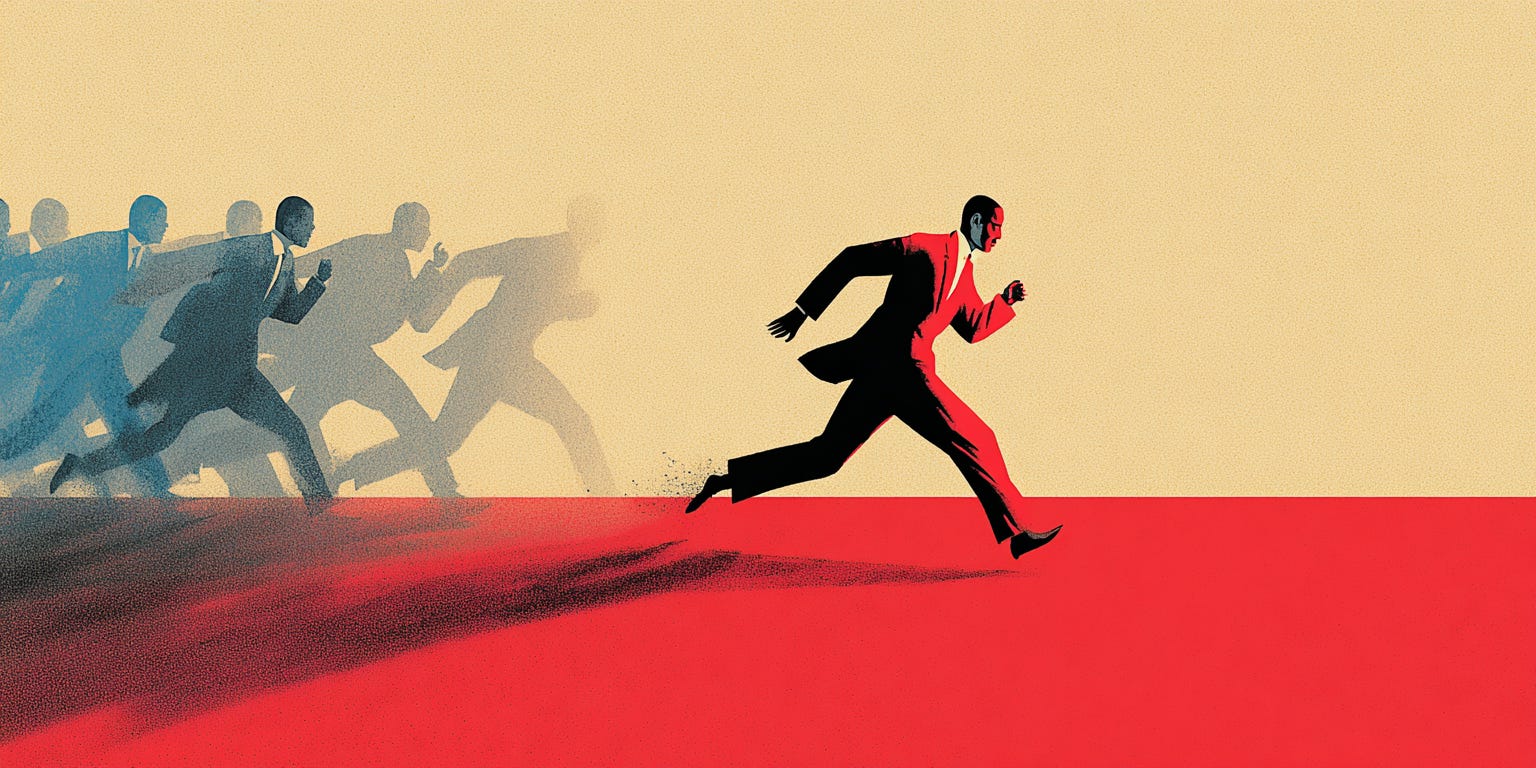
Chapter Two: Growth, Comparison, and the Treadmill
In 2021, we raised capital. I never expected Pavilion to do that, and at the time it felt like validation. The investors weren’t demanding anything extreme, but something shifted inside me anyway.
Without being told to, I internalized the need to grow and to grow quickly. I began comparing Pavilion to venture-backed software companies. I started paying attention to metrics that had never mattered to me before. Creation slowly gave way to justification. Instead of asking, Is this interesting? Is this useful? I found myself asking, Is this big enough? Fast enough? Fundable enough?
By 2023, I felt constantly urgent and strangely unfocused. Not panic attacks, exactly. But a persistent nervous energy that never really shut off. We chased multiple revenue streams. We diluted our voice. We stopped being as opinionated. I spent time updating a personal spreadsheet calculating potential exit outcomes, trying to make the numbers justify my self-worth.
I felt busy but less clear. Anxious but not effective. Moving quickly, but not in any particular direction. I was intervening more, second-guessing more, and trusting myself less, even as I told myself I was just “working harder.”
The Nature of Kindness
It wasn’t necessarily or simply that the business had changed. Something had shifted inside of me.
Somewhere along the way, I stopped practicing many of the things I had once preached. When I wrote Kind Folks Finish First, the core idea wasn’t performative kindness or being nice to others at your own expense. It was about something much more basic and much harder: being kind to yourself first.
At my best, I knew what that looked like. Slowing down. Creating space. Journaling for gratitude as a way to ground myself, to remind myself that my worth wasn’t conditional on outcomes. I had rituals that helped regulate me before I started thinking or deciding.
As Pavilion shifted into a more competitive, finite mode, those practices quietly fell away. I told myself I didn’t have time. That they were indulgent. That once things “settled down,” I’d return to them. Instead, I replaced self-kindness with pressure, self-monitoring, and constant evaluation.
I was flooded with inputs: metrics, comparisons, opinions, expectations, Slack messages, investor narratives, and the ambient noise of social media. I assumed the solution was more effort and more thinking. In reality, I was trying to solve a physiological and emotional problem with cognition.
I wasn’t just mismanaging the business. I was mismanaging myself.
This is where the idea of input density clicked for me. An explanation for why everything that once felt easy now felt heavy. The higher the input density, the harder it became to access the creative, patient, self-trusting version of myself that had built Pavilion in the first place.
What I had lost wasn’t discipline or ambition. I had lost self-compassion. And without that foundation, no amount of strategy was going to work.
Input Density (The Hidden Mechanism)
Over time, it became clear to me that the way I was feeling had a structure to it. The constant urgency, the difficulty focusing, the sense that everything required attention all at once. This wasn’t random, and it wasn’t a personal failing. It followed a pattern that’s well documented in cognitive science and neuroscience.
What I now call input density shows up in the research as a combination of task switching, interruptions, cognitive load, and stress physiology. Studies on task switching consistently show that when people move between tasks, some portion of their attention remains attached to the previous task, a phenomenon known as attention residue. Even short switches reduce accuracy and working memory capacity, especially in complex knowledge work. The effect compounds when switching becomes continuous rather than occasional.
There’s also evidence that inputs don’t need to be consciously engaged to have an effect. Research on digital distraction has shown that the mere presence of a smartphone, even when it’s face down and unused, measurably reduces available cognitive capacity. Part of the brain stays occupied monitoring the possibility of incoming demands.
What matters most to me is that this isn’t only cognitive. It’s physiological.
A large body of neuroscience research shows that even moderate stress rapidly impairs prefrontal cortex function, the part of the brain responsible for judgment, long-term planning, and impulse control. Under stress, neural resources shift toward faster, more reactive systems that favor short-term action over thoughtful integration.
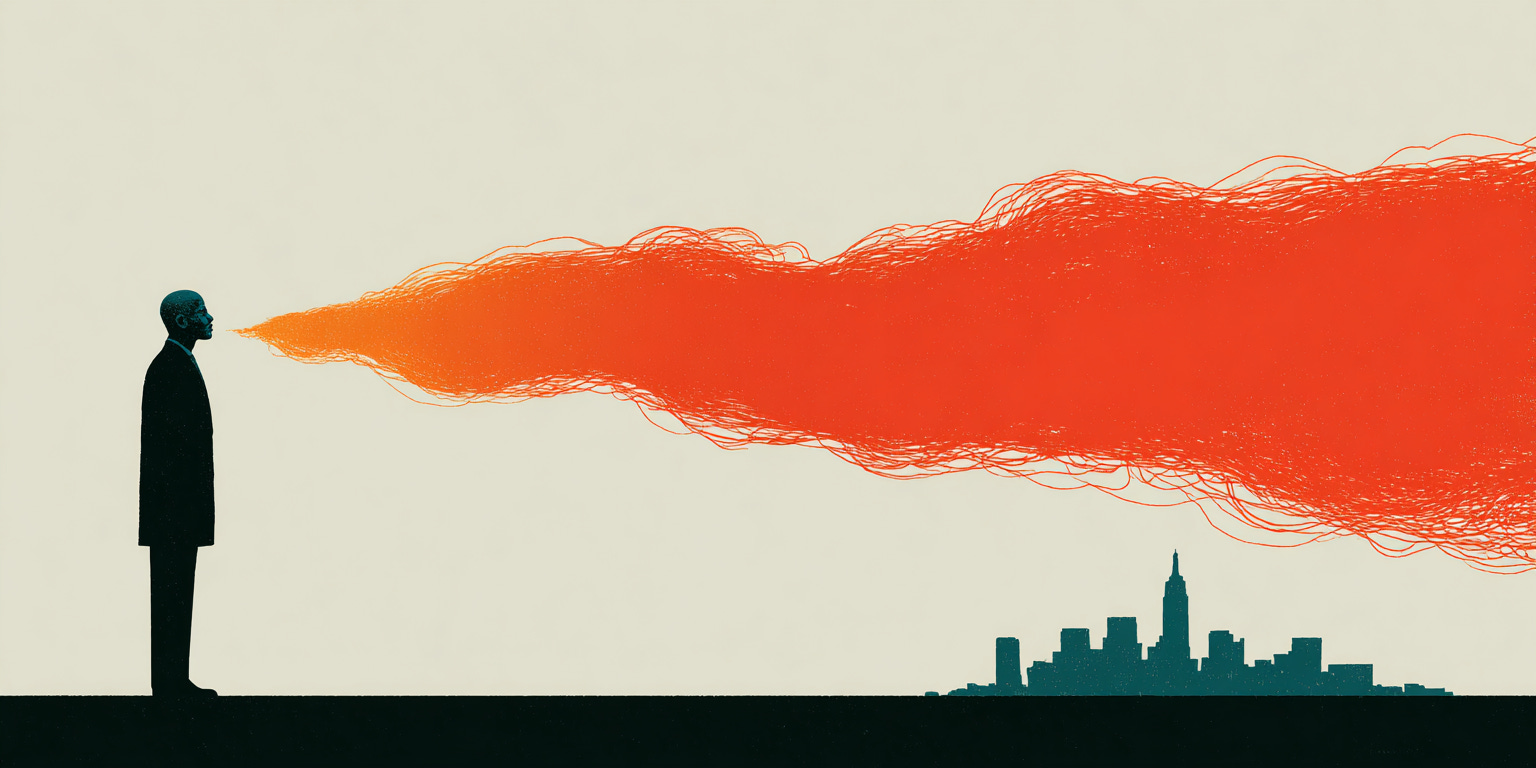
That description maps almost perfectly onto my experience. As inputs accumulated, metrics, comparisons, expectations, narratives, my nervous system tipped into a persistent state of low-grade activation. I felt compelled to act, intervene, and respond, even when direction was unclear. From the outside it looked like intensity. Inside, it felt like noise.
Workplace studies that track physiology reinforce this pattern. Research using heart rate variability, a common proxy for autonomic nervous system regulation, shows that frequent interruptions and constant email monitoring correlate with higher stress and reduced recovery. When interruptions are reduced, both perceived stress and physiological markers improve.
Seen through this lens, the environment matters as much as intention. Finite, competitive contexts naturally multiply inputs. Scoreboards, benchmarks, timelines, peer comparisons, valuation narratives. Each one adds cognitive and physiological load. Over time, the system degrades, not because of a lack of effort, but because it’s operating beyond its design limits.
Finite, competitive environments explode input density. Dashboards expand past the point of coherence. You begin to benchmark every single data point. You start tracking too many narratives at once: Are we ahead? behind? big enough? fast enough? failing quietly? Even when no one is explicitly pressuring you, the environment itself creates urgency.
An infinite, creative orientation does something quieter and more powerful. It collapses inputs. It reduces the number of narratives that need to be tracked simultaneously. It stretches the time horizon, which lowers urgency at a physiological level. What emerges is not just better thinking, but a regulated system capable of sustained, coherent work.
Clarity, I’ve come to believe, follows regulation. And regulation follows design.
Two Books That Gave Me Language
Around this time, two very different books helped me name what I was experiencing.
Wallace Wattles: “The Science of Getting Rich”
This is a book over 100 years old that serves as a canonical self-help text. The core idea is that your thoughts can create your reality. Wattles draws a sharp distinction between the competitive mind and the creative mind.
The competitive mind creates in opposition. It measures itself against others. It assumes scarcity and acts from comparison. The creative mind builds from curiosity, joy, and internal alignment.
Looking back, Chapter One of Pavilion was almost entirely creative. Chapter Two was competitive. Certainly not intentionally. But comparison crept in quietly nonetheless. My best work has always come from the creative mind. When I operate competitively, I lose coherence. I lose patience. I lose myself.
James Carse: “Finite and Infinite Games”
This is a different book entirely. Written in the 80s, it’s fundamentally about the structures that humans create in society to interact. Carse frames life as either a finite game or an infinite game.
Finite games have winners, losers, and endpoints. The goal is to win and stop. Infinite games are played to be continued. The goal is endurance, relevance, and evolution.
Without realizing it, I had started running Pavilion as a finite competitive game. I was using growth, valuation, and exit as a scoreboard, both in general and to validate my self-worth. But Pavilion was never meant to be that kind of thing. It was always closer to an infinite game: a community, a practice, a long conversation that evolves over time.
Somehow, along the way, I’d ended up playing the wrong game
What If There Was Never An Exit?
The shift came when I asked a simple question:
What if I never sell Pavilion?
What would Pavilion look like if I planned to run it for decades? How would I hire, build, pace, and decide if the goal wasn’t to win, but to continue?
With that Buddhist understanding that, if I ever were to create outsized enterprise value, it would likely come from this thought pattern in the first place.
As soon as I asked that question, something in my nervous system relaxed. The urgency softened. I slept better. Decisions felt cleaner. Ironically, the only way to build something worth selling is to stop designing it to be sold.
the only way to build something worth selling is to stop designing it to be sold
A Simple Framework (For Me, and Maybe Others)
I’m still developing this, but three principles are already clear:
1. Extend the Time Horizon
Enduring institutions are built over decades, not quarters. That shift alone changes almost every decision.
2. Aggressively Manage Inputs
I don’t need constant updates, opinions, or scoreboards. Fewer inputs restore clarity and trust in myself.
3. Name the Game You’re Playing
When comparison shows up, I remind myself: I’m playing a different game. An infinite, creative one.
Run Your Own Race
The lesson for me is simple.
I don’t burn out from work. I burn out from playing the wrong game at the wrong tempo with too many inputs. When I choose a game that fits how I’m wired, clarity returns almost automatically.
Run your own race. Play the game you’re designed for.
But first, make sure it’s one your system can finish. If it has an end at all.
This entire post resonated more than I can express - but I’ll try! As I plan for my next role I keep thinking - is it even possible to find a company that has the culture of curiosity, creativity, respect and kindness that I so despeartely want and also bring to an organization? Founders talk about the unique and wonderful culture they’ve built - but if they’re building a business from day 1 to sell, can they ever truly prioritize culture? Investors aren’t buying culture. Yet, that’s what matters to me most - and that’s what breed’s the best products. I love to build, to create, to think big picture - to think about what my customers want and create/deliver the best, stickiest products - and to do it in an envirnoment that values the PRODUCT. But “big picture” to my mind doesn’t mean a quick build to toward acquisition at a cost to your product, you customer, your people and yourself - - that feels utterly “small picture”. Thanks for putting words to so much I’ve been thinking and feeling these days.
A lot of young founders need to read this. Thank you for sharing your honest perspective, Sam.